Prop Rentals
Almost nothing you see on screen was bought for the shoot. The sofa, the lamps, the art on the wall, the mug in someone's hand, the file cabinets in the background of a scene nobody's looking at. Nearly all of it is rented, returned, and rented out again next week on something else. That's what a prop house is. Warehouses full of furniture, dressing, and objects, organized by period and category, rented by the day to the people building sets. There are hundreds of them across the US, most with inventory that isn't online in any usable form. Finding the right piece has historically meant knowing which house to call, and calling.
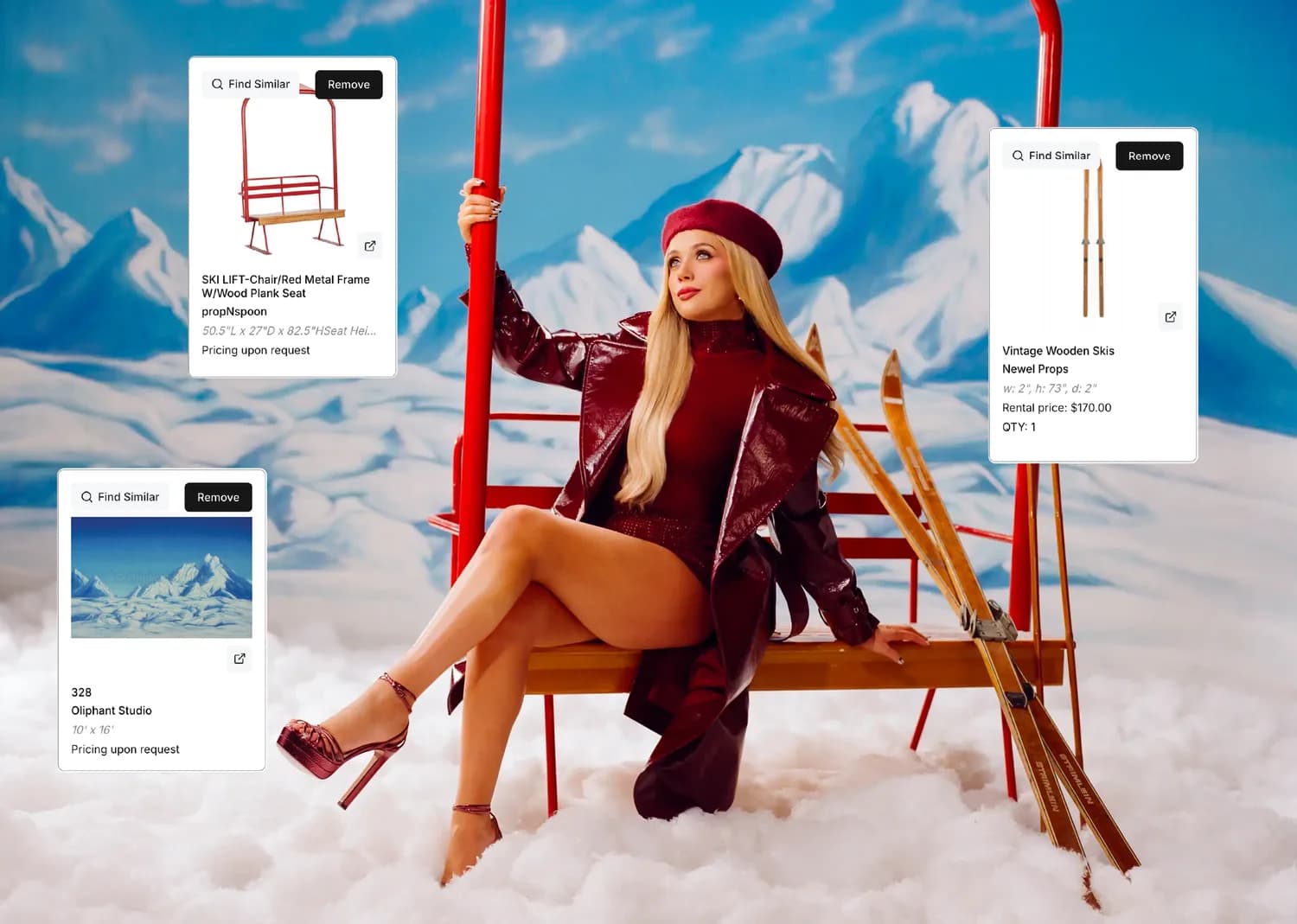
GetSet indexes inventory from 250+ prop houses across New York, Los Angeles, Miami, and Atlanta into one searchable place. Photos, dimensions, and availability across every vendor at once.
What you can rent
The word "prop" covers a much wider range than most people outside the industry expect. Broadly, it breaks into these categories.
Furniture
The largest category and the one most jobs start with. Seating, tables, casegoods, beds, desks, storage — spanning 18th-century antiques through contemporary. Scale matters as much as style, which is why every listing on GetSet shows dimensions.
Set dressing
Everything that makes a room read as lived-in rather than staged. Rugs, drapery, pillows, throws, decorative objects, wall hangings, mirrors, and the accumulated clutter of a real life. Usually the difference between a set that works and one that looks like a showroom.
Hand props
Anything an actor touches or carries. Phones, glasses, watches, briefcases, weapons, tools, cigarettes, correspondence. Handled separately from dressing at most houses because the requirements are different — hand props need to survive repeated takes and often need matching duplicates.
Tabletop and smalls
Dishware, glassware, flatware, serving pieces, and the small styling objects that carry still-life and food photography. New York has particular depth here, driven by the volume of editorial and commercial still-life work that shoots in the city.
Cleared art
Framed art, paintings, photography, prints, and sculpture available for on-camera use. "Cleared" means the rights situation won't create a problem in post, which is why this category is handled separately from decorative art. One of the most reliably time-consuming things to source, and one of the easiest to search for.
Lighting and practicals
Table lamps, floor lamps, sconces, pendants, chandeliers, and task lighting. A practical is any fixture that appears on camera and actually turns on. Period-correct lighting does more to date a room than almost anything else in it.
Greens and florals
Real and artificial plants, trees, hedging, seasonal florals, and full landscape dressing. Scale is the whole variable — a six-foot ficus and a fifteen-foot ficus solve entirely different problems.
Signage and neon
Vintage business signage, neon, lettering, street signs, and custom lit pieces. Heavily used in music video, fashion, and bar and restaurant builds, where one sign resets the read of an entire location.
Electronics and technology
Period-correct televisions, computers, monitors, radios, stereo equipment, telephones, and cameras. Getting the technology right is one of the fastest ways to sell a period, and one of the fastest ways to break it.
Books and paper goods
Books by the shelf or by the linear foot, magazines, newspapers, files, maps, and ephemera. Sold by the foot more often than by the title, because what matters is the spine color and the density.
Specialty categories
Where prop houses get genuinely deep. Medical and hospital. Office and institutional. Restaurant and bar. Retail and visual merchandising. Industrial and warehouse. Laboratory and scientific. Military. Sporting goods. Musical instruments. Luggage and trunks. Religious. Western. Nautical. Holiday and seasonal.
Most of these barely exist as a searchable category anywhere. They're the reason people call ten houses.
Backdrops and surfaces
Painted backdrops, seamless, textiles, flooring samples, wall surfaces, and shootable panels. Core to still-life, tabletop, and studio-based commercial work.
Styles and periods
For many projects set in another time or specific style, much of the sourcing work is period. Here's roughly how the range breaks down, and what each look actually depends on.
Pre-1900 — Victorian, Georgian, Federal, Empire Dark woods, carved detail, heavy upholstery, formal proportion. New York has the deepest antique inventory of the four markets by a wide margin.
1900s–1910s — Arts and Crafts, Mission, Edwardian Oak, straight lines, exposed joinery, lighter palettes than the Victorian era it reacted against.
1920s–1930s — Art Deco, Streamline Moderne Geometry, lacquer, chrome, veneer, mirrored surfaces. Miami carries unusual depth here for architectural reasons.
1940s — Wartime, utility, early Hollywood Regency Practical and worn on one end, glamorous and theatrical on the other. Two distinct looks from the same decade.
1950s — Atomic, diner, early midcentury Formica, chrome, boomerang patterns, vinyl, blonde wood. Chrome-and-vinyl diner dressing is one of the most requested single looks in the business.
1960s — Mod, Space Age, Danish modern Teak, molded plastic, saturated color, low profiles, geometric prints.
1970s — Earth tones, chrome and glass, rattan Burnt orange and avocado, wood paneling, macramé, shag, conversation pits, smoked glass. Currently one of the most in-demand periods across fashion and commercial work.
1980s — Memphis, postmodern, corporate High-gloss lacquer, brass and glass, black leather, pastel and neon, early cubicle office. Ages faster on camera than any other decade, which makes accuracy matter more.
1990s — Minimalism, beige corporate, grunge Blonde wood, oversized upholstery, beige and hunter green, CRT monitors, thrifted layering. Now firmly a period look rather than "old furniture."
2000s and Y2K Translucent plastics, brushed aluminum, early flat screens, low-slung modular seating. The newest period being actively requested as period.
Cross-period looks Some styles aren't tied to a decade and get requested by name:
Midcentury modern — the most-requested style in the business, spanning roughly 1945–1969 Browse →
Industrial — factory salvage, raw steel, worn wood, exposed hardware Browse →
Hollywood Regency — high-gloss, brass, lacquer, theatrical glamour
Bohemian — layered textiles, rattan, plants, collected rather than bought
Brutalist — concrete, raw form, heavy sculptural mass
Coastal and tropical — rattan, wicker, linen, palm. Strongest in Miami
Rustic and farmhouse — reclaimed wood, enamelware, patina
Scandinavian — light wood, restraint, functional simplicity
Contemporary — current-season furniture, most heavily used in commercial and fashion work
Who rents props
Film and television — production designers, art directors, set decorators, prop masters, leadmen, and buyers dressing stages and practical locations.
Commercials and branded content — fast turnarounds, heavy contemporary usage, frequent last-minute client direction changes.
Fashion and editorial — prop stylists and photo producers building sets for lookbooks, campaigns, and editorial. Different rhythm from film: shorter rentals, tighter aesthetic control, more emphasis on individual hero pieces.
Music videos — the most stylistically adventurous work in the market, and the most likely to need something specific and strange on two days' notice.
Still life and food photography — tabletop-driven, surface-heavy, high volume in New York.
Events and experiential — brand activations, launches, installations, and immersive builds. Often blends prop house and event rental inventory.
Retail and visual merchandising — window displays and in-store installations, usually on seasonal cycles.
Where GetSet covers
Prop rentals across four markets, each with its own character:
New York — deepest antique, cleared art, and tabletop inventory. Concentrated in Brooklyn, Queens, and North Jersey.
Los Angeles — the largest inventory anywhere, with specialty depth no other market matches. Concentrated in Sun Valley, North Hollywood, and Burbank.
Miami — outdoor, tropical, deco, and contemporary. Heavily seasonal, November through April.
Atlanta — growing fast alongside Georgia's production volume. Strong regional and practical inventory.
How it works
Search across every vendor in a city at once. Filter by category, era, style, and dimensions. Pull selects into a project board, export a client deck or pickup list to Google Slides, and request availability from all your vendors in a single go.
Membership is free to start and open to working designers, decorators, prop masters, and stylists.
Common questions
What's the difference between a prop and set dressing? Set dressing is everything that furnishes the space. Props are the things characters actually handle. In practice the line blurs, and most houses rent both — but they're often tracked by different people on the crew.
How much do prop rentals cost? Rates vary widely by vendor, piece, and rental period, typically quoted as a daily rate against a weekly structure. Rates are visible to GetSet members on each listing.
Do I need insurance to rent props? Almost always. Most vendors require a certificate of insurance naming them as additional insured before release. Request it as soon as your dates are firm.
How far in advance should I book? A week is comfortable for general dressing. Hero and period-specific pieces need longer, and Miami in season needs longer still.
Can anyone rent from a prop house? Most houses work with production companies and industry professionals rather than the general public. GetSet membership is limited to working art department and styling professionals.
What if the piece I need is in another city? Many vendors ship, and it's common practice for specialty and hero pieces. Check local availability first — that's most of what GetSet is for.